
The Basic Gear You Need for a Smooth, Lasting Ceiling Fix
The right tools make drywall ceiling repair faster, cleaner, and stronger. You do not need a truck full of gear, but you do need the correct basics. With a few key hand tools, proper safety items, and the right patch materials, you can fix cracks, holes, and water-damaged spots the right way. Using the wrong tools often leads to uneven surfaces, loose patches, and more work later.
What You Need Before Starting
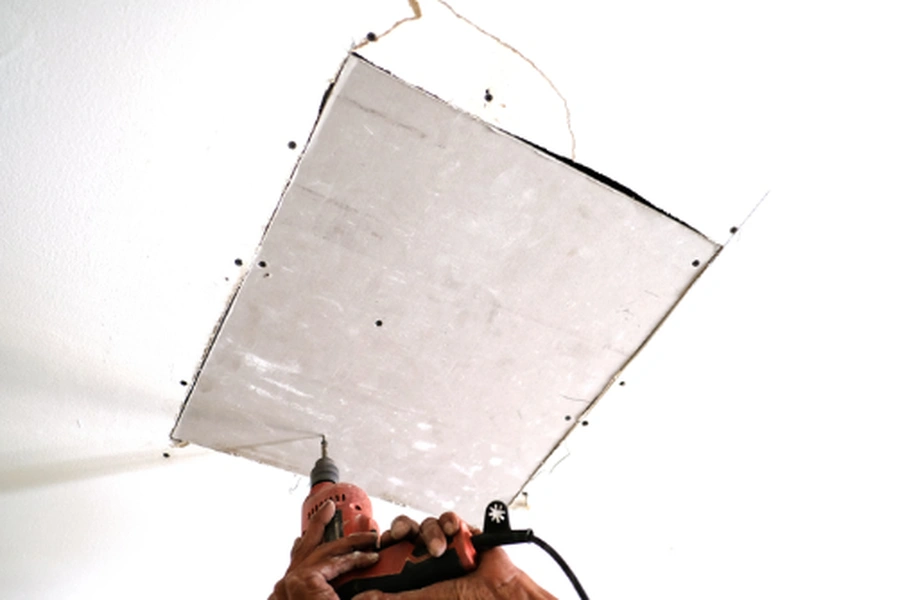
Before you begin any drywall ceiling repair, gather all tools and supplies in one place. Climbing up and down a ladder wastes time and can be unsafe. Ceiling work also creates dust, so safety gear matters.
- Stable step ladder
- Safety glasses and dust mask
- Drywall taping knife (6-inch and 12-inch)
- Utility knife with sharp blades
- Drywall saw or jab saw
- Drill or screwdriver
- Drywall screws
- Joint compound
- Sandpaper or sanding sponge
- Drywall patch or replacement panel
- Stud finder
A stud finder helps you anchor new drywall to solid framing. This gives your repair better support and helps prevent sagging over time.
Step-by-Step Process for Ceiling Repair
Ceiling drywall work follows a clear order. Skipping steps can lead to cracks or visible seams later.
- Inspect the damage. Check for soft spots, stains, or loose drywall. If you see water damage, fix the leak first.
- Cut out damaged sections. Use a utility knife or drywall saw to remove the weak area. Make clean, straight cuts.
- Secure backing support. If needed, screw a wood brace above the ceiling opening for patch support.
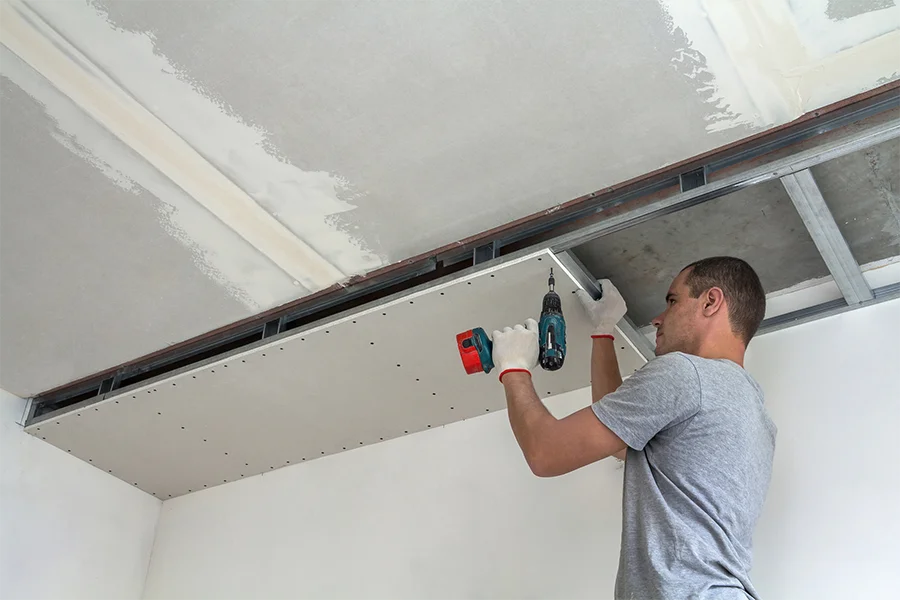
- Install the patch. Cut drywall to fit the opening. Attach it with drywall screws into framing or braces.
- Apply joint tape. Place tape over seams to prevent cracking.
- Spread joint compound. Use a 6-inch knife for the first coat. Let it dry fully.
- Add wider coats. Use a 12-inch knife to feather edges. This helps blend the patch.
- Sand and smooth. Light sanding removes ridges and bumps.
- Prime and paint. Match ceiling texture if needed before painting.
Taking your time with sanding and feathering makes the repair nearly invisible.
Common Mistakes to Avoid
Many ceiling repairs fail because of simple tool mistakes. Here are problems to watch for:
- Using dull blades that tear drywall paper
- Skipping joint tape over seams
- Applying thick coats of compound that crack
- Not allowing full drying time between coats
- Failing to anchor drywall into framing
Another common issue is poor ladder positioning. Always place your ladder on level ground. Stretching too far to one side can cause uneven compound spread or even injury.
When to Call a Professional
Some drywall ceiling repair projects are larger than they appear. If the ceiling is sagging across a wide area, there may be structural issues. Large water stains can also mean hidden mold or framing damage.
You may also want expert help if:
- The repair area is bigger than one square foot
- The ceiling has heavy texture that is hard to match
- There are signs of mold growth
- The drywall keeps cracking in the same spot
Textured ceilings, especially older popcorn finishes, can be tricky. Matching texture takes skill and special tools. In these cases, professional drywall services often save time and stress.
Final Recommendation and Help in Washington Township, OH
If you are dealing with ceiling damage in Washington Township, OH, we can help make the process simple and safe. Our team at Hernandez Drywall Services handles everything from small patches to full ceiling replacements. We use the right tools, proper safety steps, and proven repair methods to deliver smooth, lasting results. Call us at (937) 442-5641 to schedule an inspection or ask questions about your ceiling repair needs. We are ready to help you restore your home with clean, professional work.