
What Leads to Wall Damage and How to Repair It the Right Way
Drywall damage usually comes from moisture, impact, house movement, or poor installation. Small holes and cracks can often be fixed with basic tools, while larger or wet areas may need professional drywall patch repair. Knowing the cause helps you choose the right fix and avoid more damage later.
Common Symptoms You May Notice
Drywall problems often start small. You might see a tiny crack above a door. Or a soft spot near a window. Over time, these issues can grow.
Here are some signs to watch for:
- Hairline cracks along seams or corners
- Nail pops that push through paint
- Small holes from door handles or furniture
- Large dents from impact
- Stains or bubbling paint from water
- Soft or crumbling drywall
Each symptom points to a different cause. The fix depends on what is happening behind the wall.
Likely Causes Behind the Damage
One common cause is moisture. Leaky roofs, plumbing leaks, or high humidity can soak drywall. When drywall gets wet, it weakens fast. It may sag, stain, or even grow mold.
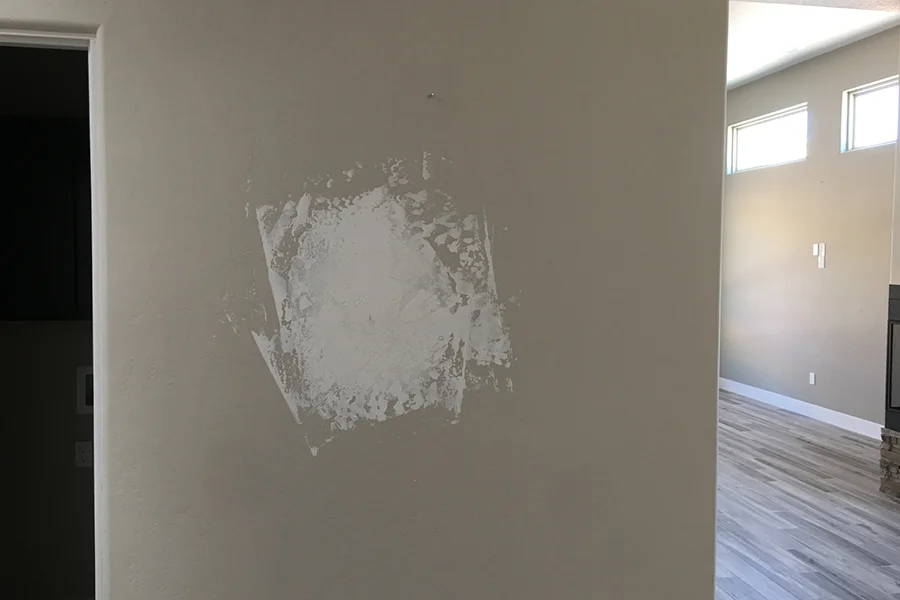
Another cause is impact. Doors swing open too hard. Kids play indoors. Furniture hits the wall. These accidents leave dents or holes that need drywall patch repair.
Normal house movement also plays a role. Homes settle over time. This can cause cracks near windows, doors, and ceiling joints.
Poor installation is another issue. If drywall was not secured well, screws may pop out. Seams may crack if taping was rushed or done wrong.
In many homes, damage is a mix of these problems. That is why it helps to look at the full picture before starting repairs.
What to Check First
Before fixing the surface, check for deeper issues. Covering up damage without solving the cause leads to repeat problems.
Start with these steps:
- Touch the area to see if it feels soft or damp
- Look for water stains above the damage
- Check nearby plumbing fixtures
- Press gently around cracks to see if they spread
- Look at doors and windows for shifting frames
If you find moisture, fix that first. If you see signs of movement, the crack may return unless framing issues are addressed.
Safe Fixes Vs Pro-Level Repairs
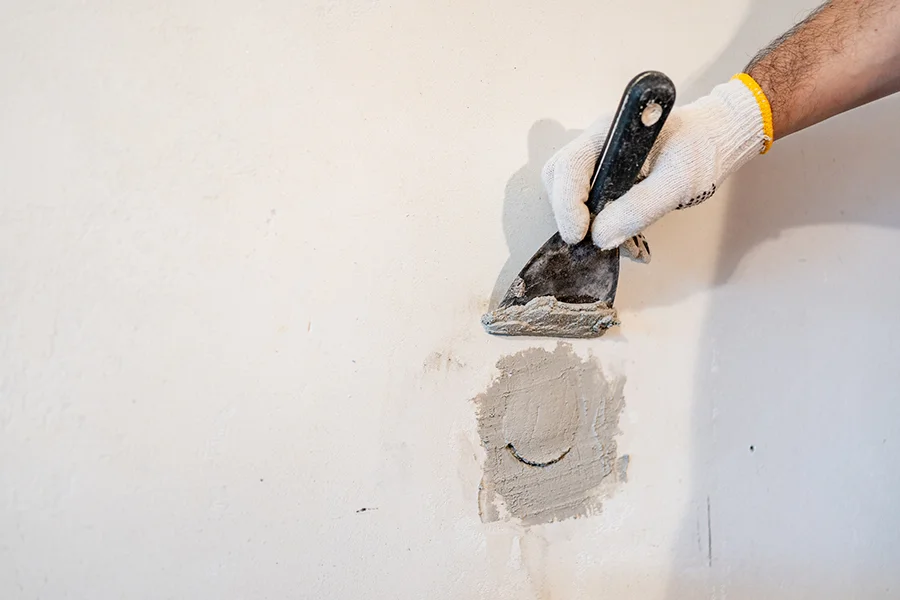
Some drywall patch repair jobs are simple. Small nail holes and minor dents can be filled with spackle. After it dries, sand it smooth and repaint.
For holes larger than a few inches, you may need a patch kit. This often includes mesh tape and joint compound. The steps usually follow this order:
- Cut away loose drywall
- Place a mesh or drywall patch over the hole
- Apply joint compound in thin layers
- Let each layer dry fully
- Sand smooth and repaint
Water-damaged drywall is different. If the area is soft or moldy, it often needs to be cut out and replaced. This is more than a simple patch. It may fall under a larger service like that includes inspection and replacement.
Large ceiling cracks, sagging panels, or repeated seam failures are best handled by a skilled crew. Matching texture and paint can also be tricky. Poor blending makes the repair stand out.
Prevention Tips to Avoid Future Damage
While you cannot stop every accident, you can lower the risk of drywall problems.
- Fix roof and plumbing leaks right away
- Use door stoppers to prevent handle dents
- Keep indoor humidity at safe levels
- Avoid hanging heavy items without anchors
- Inspect walls each season for small cracks
Early repairs cost less and take less time. A small crack is much easier to handle than a large split across the wall.
Get Reliable Help for Lasting Results
If you are dealing with damaged walls in Washington Township, OH, it is best to act quickly before the problem spreads. At Hernandez Drywall Services, we handle drywall patch repair for holes, cracks, and water damage of all sizes. We focus on clean lines, smooth finishes, and repairs that blend with your existing walls. Call us at (937) 442-5641 to schedule an inspection and let us restore your walls the right way.